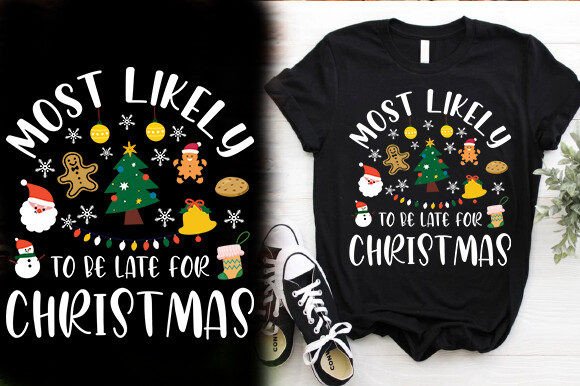
Most Likely to Be Late for Christmas Review
As a designer who spends more time troubleshooting stitch density than actually sleeping, I approach every new design file with a healthy dose of skepticism. The market is flooded with generic holiday graphics that look charming on screen but turn into tangled nightmares on the hoop. That is why I take the time to evaluate files like MOST LIKELY to BE LATE for CHRISTMAS before committing them to fabric. This isn’t just another seasonal clipart drop; it is a functional asset for anyone running a craft business or building a brand around handmade goods.
The title alone does the heavy lifting. It taps into a universal feeling—the chaotic rush of the holidays, the relatable struggle of procrastination, and the warmth of imperfect traditions. For an embroidery project, humor and relatability are often what drive sales. People don’t just buy a sweatshirt; they buy a statement that says, "I’m doing my best, even if I’m running behind." When I first opened the vector files, I immediately started visualizing how this text would translate from digital space to physical thread.
First Impressions and Visual Personality
The mood created by MOST LIKELY to BE LATE for CHRISTMAS is distinctly casual and playful. It doesn’t scream traditional elegance; instead, it whispers cozy chaos. From a layout perspective, the design feels balanced enough to sit comfortably on a chest pocket or centered on a tote bag without overwhelming the garment’s natural shape. The fact that it is built with 100 resizable vector shapes gives me confidence that the kerning and spacing can be adjusted if needed, which is crucial when adapting typography for different hoop sizes.
In terms of visual personality, this design fits squarely into the realm of modern, lifestyle-oriented branding. It appeals to the buyer who values authenticity over perfection. Whether you are creating a boutique line of aprons for home bakers or personalized gifts for friends, this design adds a touch of wit that elevates the perceived value of the item. It transforms a simple piece of apparel into a conversation starter.
Real-World Application: The Holiday Gift Scenario
Let’s talk about a specific use case. Imagine you are preparing for the peak season of your Etsy shop. You have orders coming in for custom baby onesies and matching parent tees. The trend right now is less about perfect snowflakes and more about celebrating the messy reality of parenting during the holidays. MOST LIKELY to BE LATE for CHRISTMAS is perfect for this niche.
I envision this design stitched onto a heavyweight cotton sweatshirt in a deep forest green, using cream or gold thread for high contrast. Alternatively, it would work beautifully as an embroidered patch on a canvas tote bag used for carrying last-minute gifts. The versatility of the vector format means I can easily tweak the color palette to match seasonal trends—perhaps switching to red and white for a classic look, or keeping it monochrome for a minimalist aesthetic. This adaptability is key for small business owners who need to refresh their inventory quickly without commissioning new artwork every week.
Performance in Embroidery Situations
When evaluating a design for real-life stitching, clarity is king. Because this is primarily a text-based graphic, the success of the final product relies heavily on legibility. In larger formats, such as on a pillow cover or a kitchen towel, the lettering will likely hold up well, especially if the stitch type is chosen carefully. A combination of satin stitches for the outlines and fill stitches for any decorative elements within the letters can add texture and depth.
However, not all applications are created equal. If you plan to use this for custom apparel like t-shirts or lightweight fabrics, you must be mindful of the fabric’s behavior. Thin materials can pucker under dense stitching, so proper stabilizer choice becomes non-negotiable. For embroidered patches intended for caps or hats, the curved surface requires precise digitizing to ensure the text doesn’t distort. While the vector source allows for resizing, the underlying stitch structure (which you should verify in your software) must accommodate the curvature of the hat crown.
Where Caution is Required
There are specific scenarios where this design might present challenges. On textured fabrics like bouclé wool or thick fleece, fine details can get lost, making the text harder to read. Similarly, on stretchy knits, the stability of the design depends entirely on the quality of your hooping technique and the stabilizer used. If the design includes tiny decorative accents or very small lettering, these areas are prone to thread breaks or clumping if the stitch density is too high. Always inspect the design in your embroidery software to check for overlapping paths that could cause bulkiness.
Impact on Product Value and Brand Trust
Using a well-executed design like MOST LIKELY to BE LATE for CHRISTMAS directly influences customer trust. Buyers associate clean, crisp stitching with professionalism. Even if the message is humorous, the execution should feel intentional and high-quality. A finished product that looks sloppy undermines the price point, no matter how clever the slogan. Conversely, a sharp, well-angled embroidery job signals that you care about details, encouraging repeat purchases and positive reviews.
For Etsy sellers and small shop products, this design also offers strong marketing potential. It is highly "giftable," which drives impulse buys during November and December. When photographed for listings, the playful nature of the design pairs well with rustic props like pinecones, twine, and coffee mugs, creating cohesive mockups that resonate with the target audience. It helps bridge the gap between a digital listing and a tangible, desirable object.
Practical Designer Notes for Execution
Before you hit the start button on your machine, there are several critical steps to ensure success:
- Test on Scrap Fabric: Never assume a design will stitch out perfectly on your final material. Run a test on the exact fabric and stabilizer combination you plan to use. This reveals potential issues with tension, puckering, or thread breakage early.
- Check Thread Contrast: Ensure the thread colors provide sufficient contrast against the background fabric. Low-contrast combinations can make the text illegible, defeating the purpose of the design.
- Review Stitch Density: High-density areas can create stiff spots in soft garments. Adjust the density settings if necessary to maintain comfort, especially for items worn close to the skin like baby clothes.
- Inspect Small Details: Zoom in on the vector file to identify any tiny elements that might not survive the embroidery process. Simplify or remove these if they compromise the overall clarity.
- Verify Licensing: Since this is a commercial-grade asset, confirm the licensing terms before selling finished items. Some licenses allow for unlimited end-products, while others may restrict the number of sales or require attribution.
- Use Proper Stabilizer: Choose a stabilizer appropriate for the fabric weight. Tear-away for wovens, cut-away for knits, and water-soluble for delicate projects. Skipping this step is the most common cause of failure.
Final Verdict
MOST LIKELY to BE LATE for CHRISTMAS is a smart, versatile addition to any designer’s library. Its strength lies in its relatability and adaptability. By leveraging the editable vector formats, you can tailor the design to fit various T-Shirt Designs and Graphics needs, ensuring it remains relevant across multiple seasons and product lines. For creative entrepreneurs looking to add a touch of humor and heart to their handmade products, this design delivers both style and substance. Just remember: the best designs are those that are tested, tweaked, and executed with care. Treat it with respect, and it will pay off in satisfied customers and a stronger brand presence.